
How to Deal with Separation Anxiety in Your Dog
They call them man’s best friend for a reason. With an in-built pack mentality, dogs are innately loyal to their owners, and behave this way not just for love and affection, but as a survival instinct.
It’s for this reason that you might find your dog gets particularly sad when you’re away. Some might begin to exhibit signs as soon as they see a suitcase, or others when you leave for work in the morning. Love it or hate it, we all have to leave our dogs at times, so how can we deal with dog separation anxiety?
First of all, we need to understand the difference between ‘grumbling’ and true separation anxiety.
What is separation anxiety in dogs?
There is no conclusive medical evidence as to what causes separation anxiety in dogs. However, some theorists say it may be more common in rescue dogs, who may have become attached to one owner from a young age only to be separated and given away. Alternatively, if there has been a death in the family or even a house move, these could all be triggers.
Separation anxiety is characterised by a certain set of behaviours seen only when your dog is left alone. It’s important, however, to distinguish between dog anxiety when left alone and other potential medical problems. Many will share the same symptoms, for example excessive urination/defecation, so always visit your vet if you’re not sure.
Signs of anxiety to look out for
When it comes to separation anxiety, leaving dogs at home can be stressful not just for your pup, but for you too. This is because your dog could exhibit any of the following disruptive behaviours:
Toilet issues
If your dog is usually well house trained, a sign of anxiety could be excessive urination or defecation around the house. Try not to chastise your dog for this – take them outdoors as often as you can and clean the area so that they don’t associate it with toilet activities.
Destructive behaviour
One of the most common signs of separation anxiety, destructive behaviour may involve chewing and ripping furniture, or attacking the door from which you left. If left untreated, this could cause harm to your dog such as broken teeth.
Excessive barking/howling
Once you get to know your dog, you’ll identify the different kind of barks that he/she exhibits. If you begin to hear a new kind of howl or have complaints from the neighbours, this could be a sign of anxiety. You shouldn’t hear this kind of bark at any other time.
Self-mutilation
This is less common, but nevertheless a big concern for dog owners. If your dog is biting or scratching itself when you’re away, you may need to consider natural dog calming aids or other solutions.
Vomiting/coprophagia
This is perhaps the most extreme and certainly not common. It may be hard to spot as it will not take place when you’re in the house, so consider buying a ‘nanny cam’ to spot signs of coprophagia. This is when the dog eats its own waste. If you’re concerned about this, talk to your vet.
Distinguishing separation anxiety from other problems
If you do spot any of these signs, you should be careful not to confuse separation anxiety with other issues. For example, it’s quite common for younger pups who are still in training to destroy household items, or ‘mark their territory’ with small amounts of urine around the house.
Another issue is boredom. We all have to leave the house, so make sure your dog is stimulated when you are around. A tell-tale sign of boredom is that your dog does not appear anxious, so get out those dog toys or hit the park.
Dog training tips for separation anxiety
For milder cases of anxiety, some mild counterconditioning might do the trick. What is counterconditioning? This involves gently encouraging negative behaviour traits into positive ones, for example anxious or aggressive reactions to certain situations.
You need to teach your dog to associate the bad thing – being left alone – with something good. This could be a chew toy that gently releases food over a period of time while you’re out of the house.
The gradual approach
If your dog has a more severe case, you may need to ease him/her in slowly. This involves leaving the dog alone for very short periods, and slowly building this up. You must have patience with this as it will take many weeks – go away for too long too soon, and it could have the reverse effect.
Other tips for reducing separation anxiety in dogs
Another gradual approach is to reduce what we call the ‘pre-departure cues’. Just as dogs can associate positive things like treats with certain activities, they can pick up other patterns. So for example, your dog might start to exhibit symptoms when you take out a suitcase or pick up your keys.
You need to break this association. Practise by picking up your keys, and not leaving the house. If you vary this and only go out one out of every five times, for example, the negative association will subside.
‘Out of sight’ training
There are other things you can use to help dogs with separation anxiety – even something as simple as a bathroom door. Begin to give your dog commands from behind a wall/door. That way, after a while your dog will get used to not seeing you, but still be obedient.
As you progress, you can try this with external doors, increasing the amount of time you’re away from a few seconds to minutes. As with all dog training, encourage good behaviour with positive reinforcement – i.e., those little treats!
Don’t forget
There are other solutions if you simply can’t bear to be away from your pup. You might consider taking your dog into work a couple of days a week, or leaving it with a trusted friend/family member so that it’s not alone. Other solutions like Borrow My Doggy or dog walkers will ensure your dog is taken care of during the day.
Before you start training your dog to be alone, remember:
- Most dogs start to show symptoms of anxiety after around 40 minutes
- You should not express distress/sadness when leaving as this can cause them distress
- You should not leave your dog in a hot car to practise
- You need to train your dog if you’re going to leave it in a cage/crate
- Bored dogs will likely become anxious more easily – take them on regular walks and play with them using chew toys
- Mild anxiety medication as prescribed by your vet can be a good first step, but this should be accompanied by training
- You may need behavioural therapy if these tips and treatments alone do not work.
As with any pet, we only want to show them we love and care for them. Having a dog should be a complement to your life, not a hindrance. By using positive reinforcement and making them feel warm and welcome, you’ll be able to improve your dog’s confidence and mental health.
Above all, don’t feel sad for leaving your dog. If you love them, they will love you back!
This is an example of our blogging services. Get in touch to find out more.
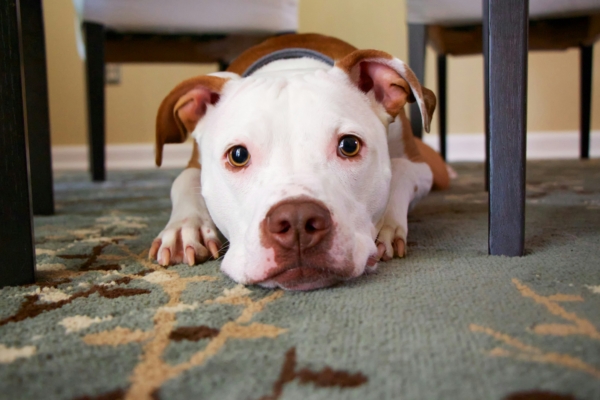
Photo by Mike Burke on Unsplash


2nd February 2020
Project Details
Client: Banoop
Skills: Blogging
Date: 2nd February 2020